Skin Cancer Warning Signs: The ABCDEs: How It Works, Explained Simply
Most skin cancers are far easier to treat when they are found early, which is why knowing what to look for matters. For moles, dermatologists use a simple checklist called the A B C D Es. A fact-checked 3D patient-education video — educational only, not medical advice.
See a mistake in this video? Report it →
Video Transcript
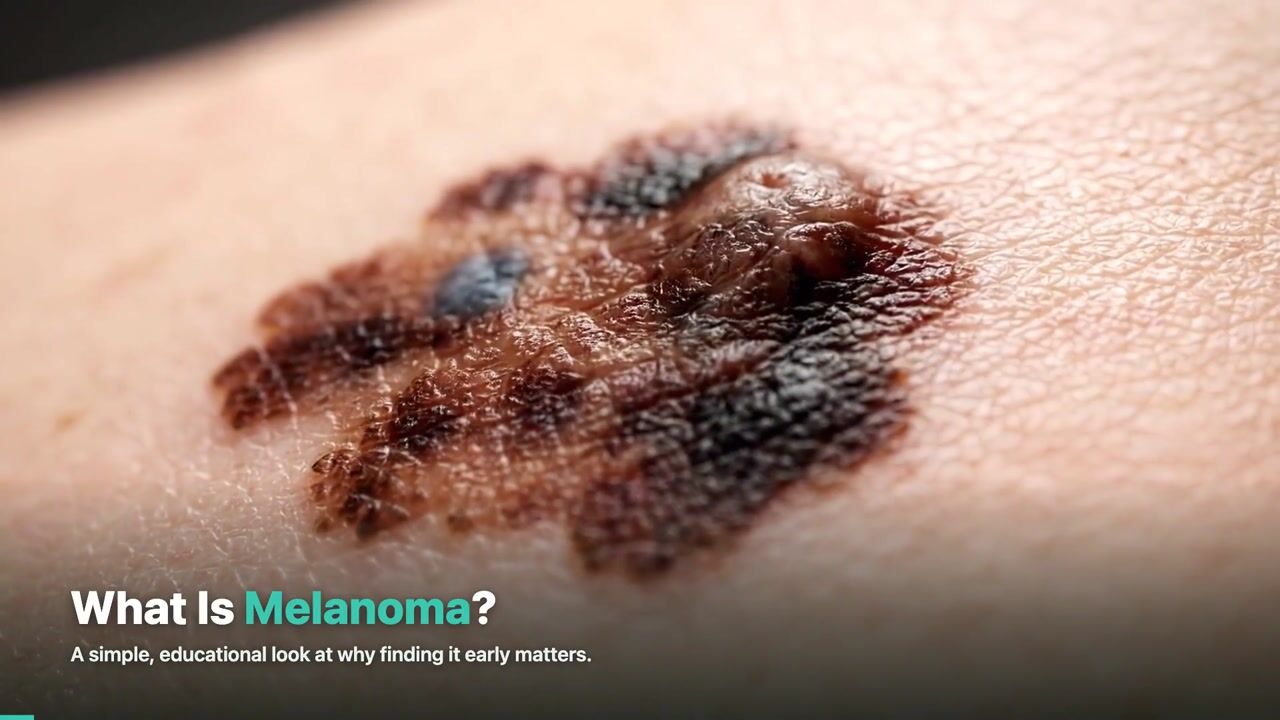
Most skin cancers are far easier to treat when they are found early, which is why knowing what to look for matters. For moles, dermatologists use a simple checklist called the A B C D Es. A is for asymmetry. If you divided the spot in half, the two halves would not match. B is for border. The edges look irregular, ragged or blurred, rather than smooth and even. C is for colour. The spot contains more than one shade, such as different browns and blacks, or patches of red, white or blue. D is for diameter. It is larger than about six millimetres, roughly the width of a pencil eraser, although skin cancers can be smaller than this. E is for evolving. The spot is changing in size, shape, colour or feel, or it has begun to itch or bleed. There is also the ugly duckling sign. A spot that simply looks different from all of your others deserves attention. Any new spot, any spot that is changing, and any sore that does not heal should be checked by a doctor promptly. This video is for general education only. It is not medical advice. Ask your doctor what's right for you.
More Skin Cancer & Screening Videos
 1:00, 1 minutes 00 seconds
 1:00, 1 minutes 00 seconds
 1:00, 1 minutes 00 seconds
Want this video on your practice website?
License the full Dermatology Learning Center — one script tag, domain-locked, $97/mo or $599/yr.