Sclerotherapy Works: How It Works, Explained Simply
Sclerotherapy is one of the most common treatments for spider veins and smaller varicose veins. A solution called a sclerosant is injected directly into the vein through a very fine needle. A fact-checked 3D patient-education video — educational only, not medical advice.
See a mistake in this video? Report it →
Video Transcript
Sclerotherapy is one of the most common treatments for spider veins and smaller varicose veins. A solution called a sclerosant is injected directly into the vein through a very fine needle. The solution irritates the lining of the vessel, so that its walls swell and stick together. The vein seals shut, and blood can no longer flow through it. Blood simply reroutes through nearby healthy veins. The treated vessel is gradually absorbed by the body and fades from view. For larger vessels the solution can be mixed into a foam, which fills the vein more completely. It is done in the office, usually takes well under an hour, and most people walk out afterwards and return to normal activity. Compression stockings are often worn afterwards. Some bruising, discolouration or firmness along the vein is common while it settles. Veins fade over weeks to months rather than immediately, more than one session is usually needed, and new veins can still develop later. This video is for general education only. It is not medical advice. Ask your doctor what's right for you.
More Vein Treatments Videos
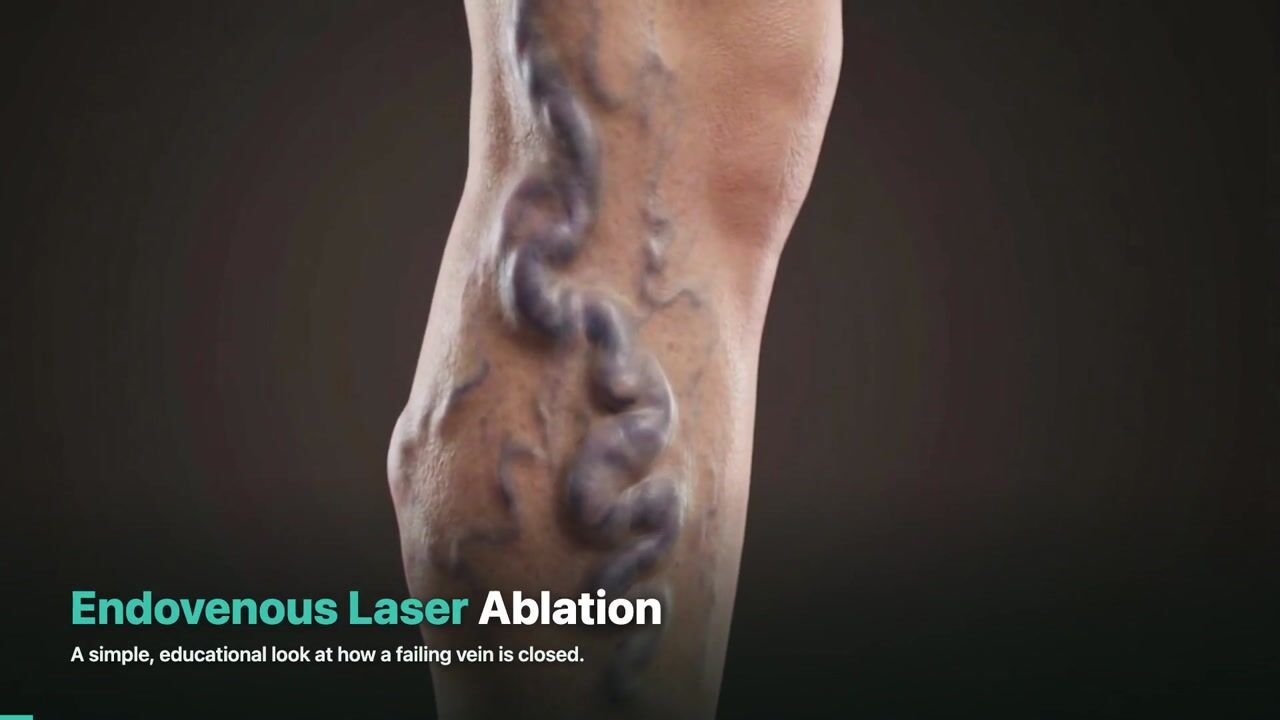 1:00, 1 minutes 00 seconds
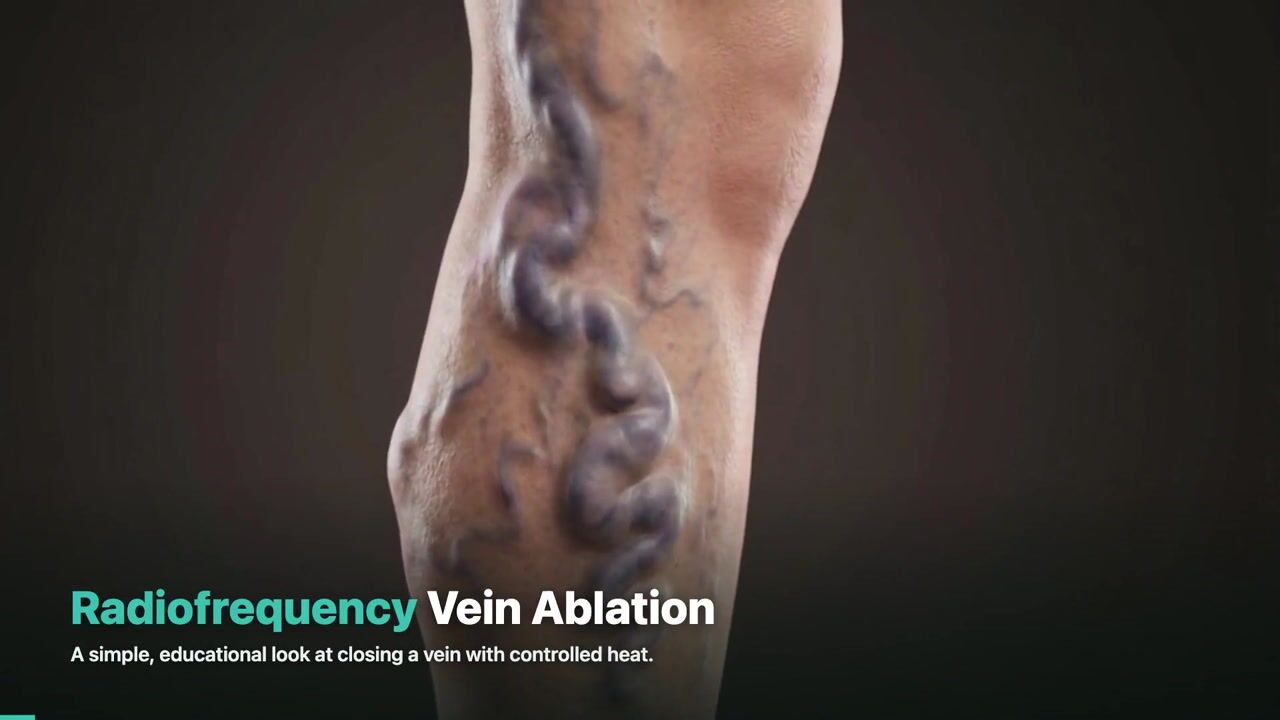 1:00, 1 minutes 00 seconds
Want this video on your practice website?
License the full Vein Care Learning Center — one script tag, domain-locked, $97/mo or $599/yr.