Endovenous Laser Ablation (EVLA): How It Works, Explained Simply
Endovenous laser ablation is a common way to close a large leg vein that is no longer working properly. When the valves in a main surface vein fail, blood falls back down it and pools in the leg. A fact-checked 3D patient-education video — educational only, not medical advice.
See a mistake in this video? Report it →
Video Transcript
Endovenous laser ablation is a common way to close a large leg vein that is no longer working properly. When the valves in a main surface vein fail, blood falls back down it and pools in the leg. Rather than stripping the vein out, the aim is to seal it closed so blood reroutes through healthy veins. Using ultrasound to guide the way, a thin fibre is passed up inside the vein through a single small entry point. Fluid is then injected around the vein. It numbs the area and cushions the surrounding tissue from the heat. As the fibre is slowly withdrawn, it delivers laser energy to the vein wall. The wall heats, shrinks, and seals shut along the whole treated length. The closed vein is gradually absorbed by the body, and blood returns through the deeper, healthy veins instead. It is done under local anaesthetic in the office. Most people walk straight afterwards and wear compression for a period. This video is for general education only. It is not medical advice. Ask your doctor what's right for you.
More Vein Treatments Videos
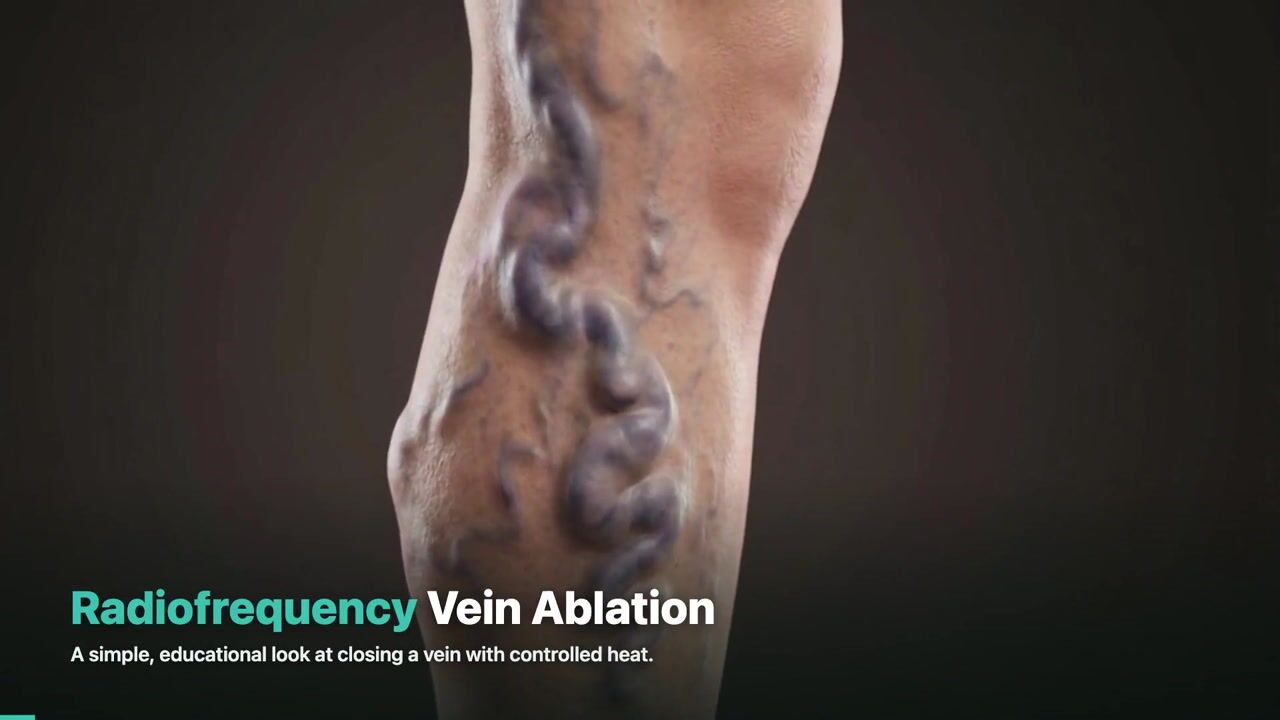 1:00, 1 minutes 00 seconds
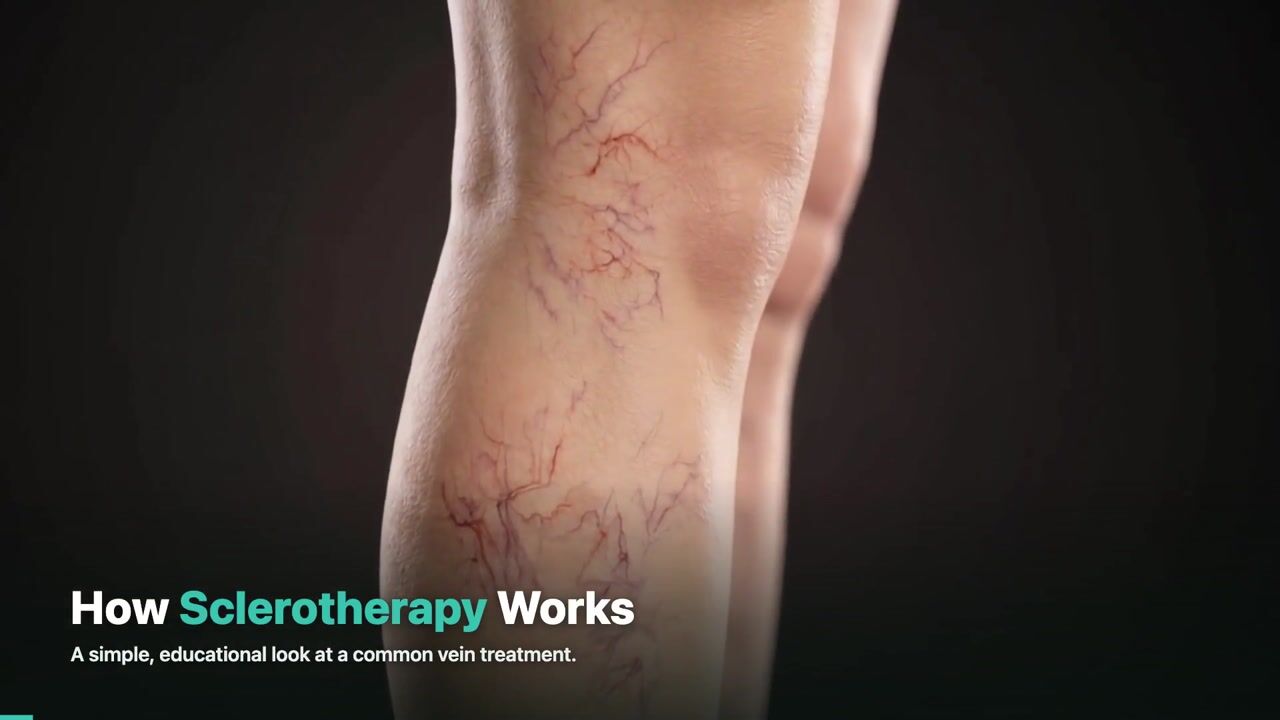 1:00, 1 minutes 00 seconds
Want this video on your practice website?
License the full Vein Care Learning Center — one script tag, domain-locked, $97/mo or $599/yr.