What Happens When a Disc Herniates: How It Works, Explained Simply
A herniated disc sounds alarming, but understanding it makes it far less frightening. Between each pair of vertebrae sits a disc: a tough outer ring wrapped around a soft, gel-like center. A fact-checked 3D patient-education video — educational only, not medical advice.
See a mistake in this video? Report it →
Video Transcript
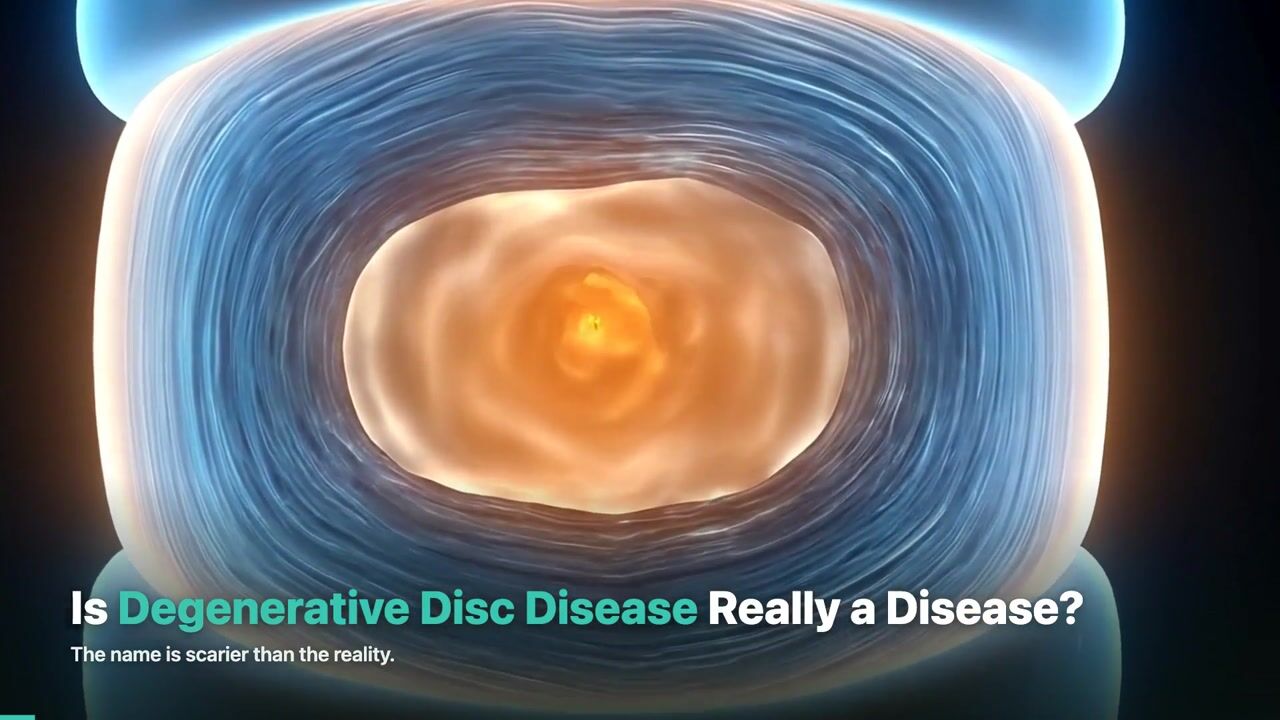
A herniated disc sounds alarming, but understanding it makes it far less frightening. Between each pair of vertebrae sits a disc: a tough outer ring wrapped around a soft, gel-like center. It works like a cushion, letting your spine bend and absorb the load of everyday movement. Over time, or with strain, the outer ring can weaken and crack, and the soft center can push outward. That is a herniation. Notice the word. The disc doesn't slip. It bulges or leaks at a weak point, usually toward the back and to one side. If that material reaches a nearby nerve root, it can press on it and release irritating chemicals, causing pain, numbness, or tingling down a limb. Here's the reassuring part. Herniated discs show up on the scans of many people who have no pain at all. And most herniations that do cause symptoms shrink and settle on their own over weeks to months, without surgery. Go to the emergency room now if back pain comes with loss of bladder or bowel control, numbness in the groin or saddle area, or new weakness in both legs. This can be cauda equina syndrome, and waiting can cause permanent damage. This video is for general education only. It is not medical advice. Ask your doctor what's right for you.
More Pain Conditions Videos
 1:00, 1 minutes 00 seconds
 1:00, 1 minutes 00 seconds
 1:00, 1 minutes 00 seconds
 1:00, 1 minutes 00 seconds
Want this video on your practice website?
License the full Pain Management Learning Center — one script tag, domain-locked, $97/mo or $599/yr.